
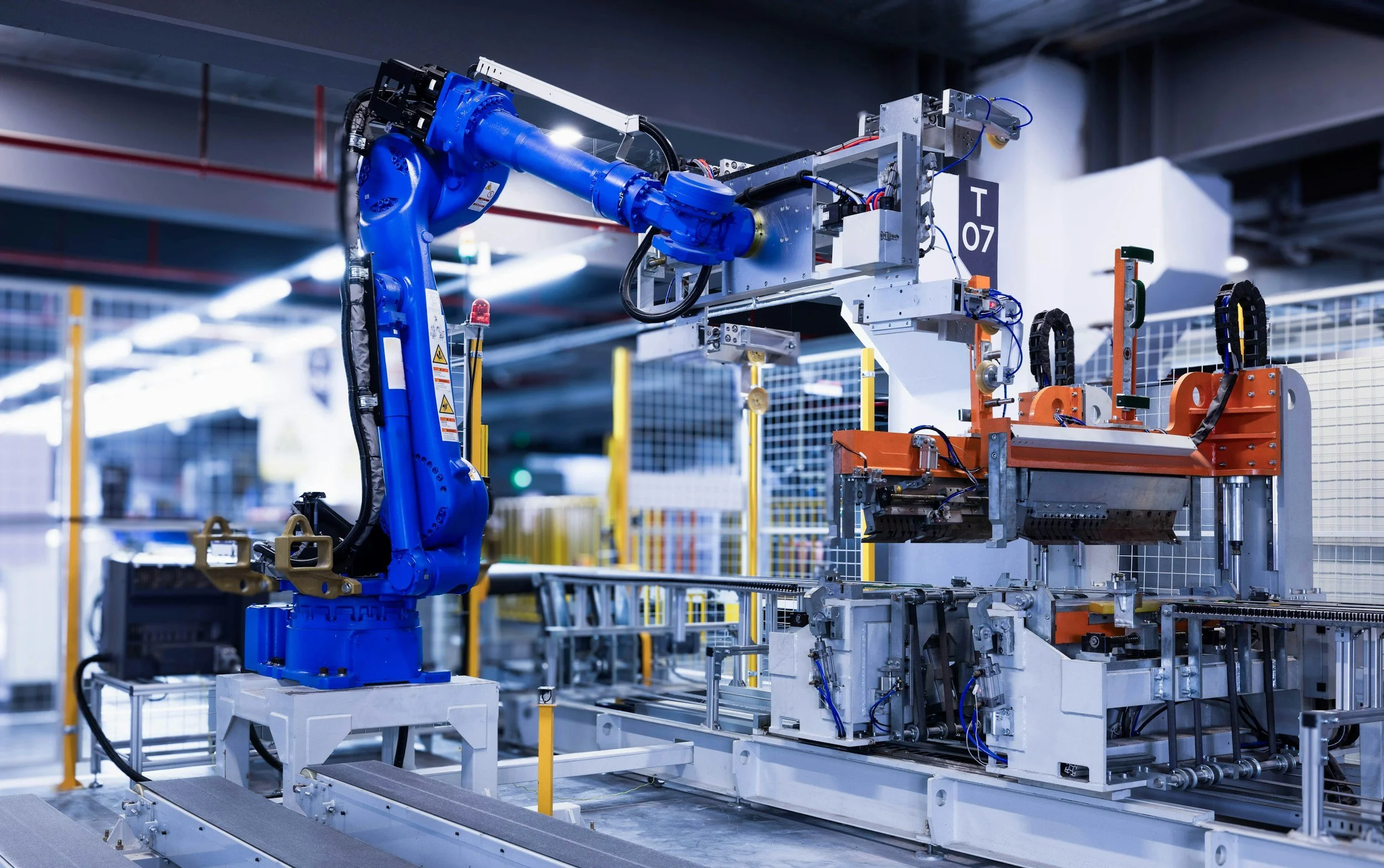
Illustrative manufacturing photo: Homa Appliances / Unsplash.
A faster design becomes much more valuable when it leads to a product that can be built again with confidence.
Christian Keil’s October 20 article, “Superhuman Hardware Design Is The Easy Part,” raises an important question: as AI becomes better at designing hardware, what does it take to turn those designs into dependable physical products?
For teams developing hardware, that question is practical. AI-assisted engineering can help explore alternatives, shorten design cycles, and reduce the work involved in getting parts ordered. Those are meaningful gains. The opportunity is to connect that speed to a production plan that covers the complete product and continues learning after the first build.
Design speed and product delivery measure different things
A completed layout or enclosure model marks progress. Product delivery also depends on how the electronics, firmware, mechanics, assembly process, and test system work together.
Consider a connector that is electrically correct but difficult to reach once the board is installed. Or an enclosure that fits the nominal model but makes a harness hard to route without pinching it. A firmware update may change startup behavior enough to invalidate an existing production test.
These are integration decisions. Finding them early protects the value of faster design. Manufacturing input belongs before design freeze, while the team can still adjust access, tolerances, assembly sequence, and test points without reopening a released design.
Beyond ordering a board
Getting an assembled circuit board into an engineer’s hands is a useful milestone. A finished product may also require programmed firmware, cable assemblies, molded parts, labels, mechanical assembly, functional testing, and packaging.
Each step introduces decisions that a purchase order alone does not settle. Which firmware version goes into the unit? How is programming success recorded? What torque or adhesive process applies? Which cosmetic conditions are acceptable? What happens when an assembly fails inspection?
Manufacturing access makes it easier to start a build. Ownership of production outcomes requires clear responsibility for resolving those questions, approving changes, and determining whether the finished units meet the agreed requirements.
That responsibility should be established before an issue turns into a shipment decision.
Define what “ready” and “accepted” mean
A pilot build should answer specific questions about the product and the process. Can the assembly sequence be followed consistently? Are fixtures suitable for the intended volume? Do the instructions capture details that otherwise depend on an engineer standing beside the operator?
Process qualification means gathering evidence that the chosen materials, equipment, settings, and methods can produce acceptable results. Its scope should reflect the product’s risks and requirements. A successful prototype is useful evidence, but it does not answer every production question.
Test strategy needs the same attention. Powering up is rarely a complete acceptance test. Teams should define which functions are checked, the measurement conditions, pass and fail limits, and what records are retained. Board-level checks and final assembly tests serve different purposes.
The test system itself also needs scrutiny. An unreliable fixture can reject good units or pass defective ones. Known reference units, fixture checks, and controlled test software help distinguish a product problem from a measurement problem.
Clear acceptance criteria give engineering and manufacturing a shared basis for decisions, including when to stop, investigate, rework, or release a build.
The next build is part of the engineering problem
Repeat production introduces a different challenge: preserving what was learned while managing what has changed.
A component available during prototyping may have a long lead time when the next order arrives. A proposed replacement may share a footprint but differ in timing, thermal behavior, electrical limits, or firmware interaction. An apparently simple substitution can require engineering review and targeted testing.
Component continuity therefore involves more than checking today’s stock. It includes approved manufacturer part numbers, reviewed alternatives, lifecycle awareness, and a defined process for substitutions.
Revision control ties those decisions together. The bill of materials, drawings, board files, firmware, work instructions, and test limits need to describe a compatible released configuration. Build records should make it possible to identify what went into a unit and which changes applied.
When production reveals a recurring defect or difficult operation, the corrective action should reach the next release and the next build. Leaving the lesson in an email thread makes the same problem easier to repeat.
Where Knectiv fits
Knectiv connects product engineering with manufacturing execution. Our work spans electrical, firmware, and mechanical engineering, design for manufacturing, prototyping, PCBA, harnesses, molding, box build, and test.
Longstanding factory relationships in China, Taiwan, and the Philippines support that work. For customers, the purpose is accountable manufacturing support across the program: bringing production questions into engineering decisions, coordinating build requirements, resolving issues, and carrying feedback into repeat production.
The useful conversation starts with the intended product, volume, requirements, and readiness gaps. From there, the team can establish what needs to be demonstrated before a pilot and what must stay controlled afterward.
Give AI a stronger production feedback loop
AI can contribute throughout this process. It can help compare component options, review documentation for inconsistencies, draft work instructions, organize test results, and surface patterns for investigation.
Those contributions become more useful when the underlying records are current and the decisions are traceable. Proposed changes still need appropriate review, and physical results need to flow back into the engineering record.
The goal is to make each design cycle and each build better informed. Faster tools create more opportunity when production knowledge remains connected to the product.
If your team is planning a pilot or preparing for repeat production, contact Knectiv to discuss the engineering, test, and manufacturing readiness work ahead.